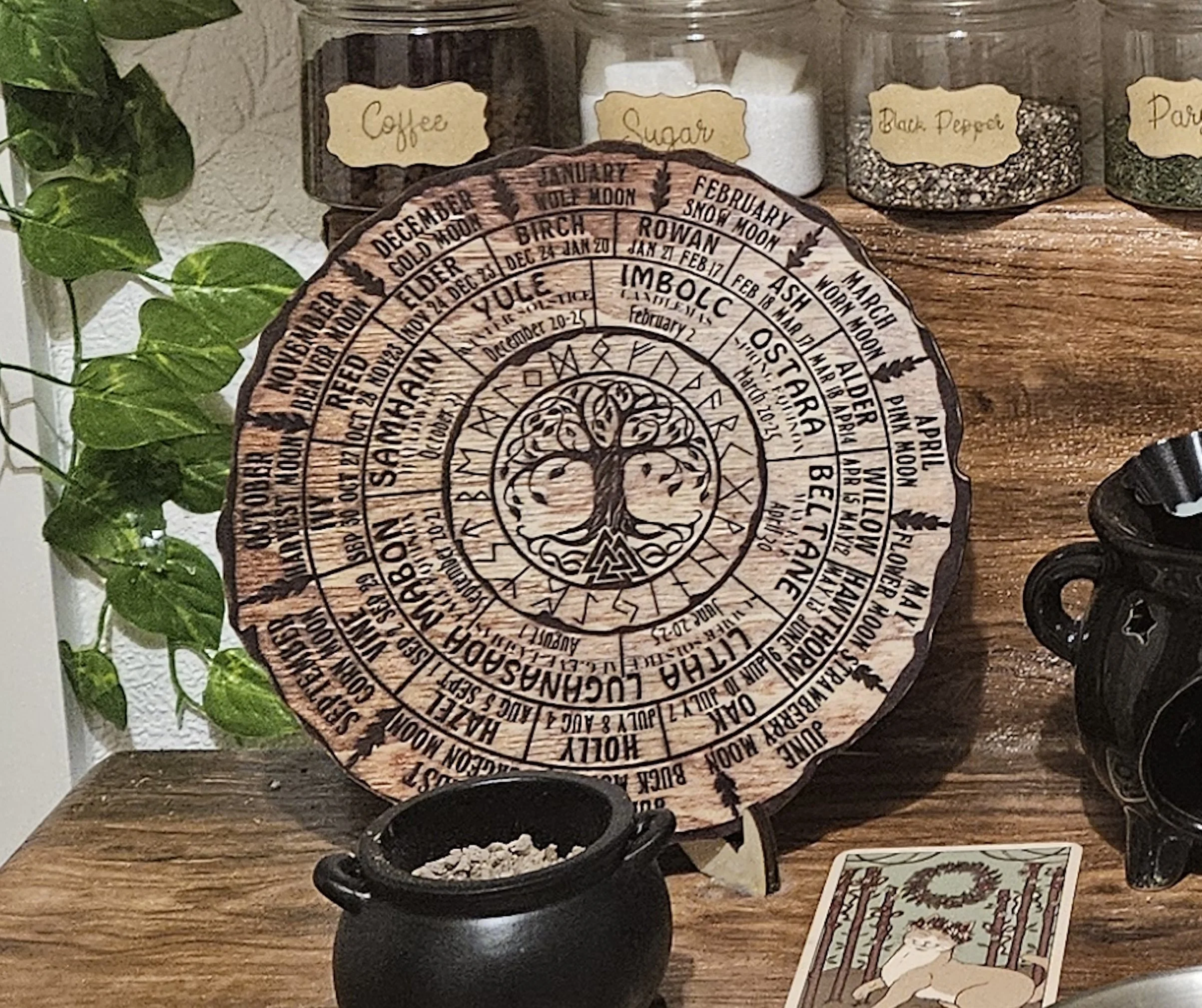
The Wheel of the Year: A Beginner’s Guide to the 8 Sacred Sabbats
For the modern practitioner, life can often feel like a frantic, linear race against the clock. We are constantly pushed to produce, achieve, and move forward without ever pausing to catch our breath. However, ancient traditions offer us a completely different way to experience time: as a beautiful, continuous circle known as the Wheel of the Year.
The Wheel of the Year is a seasonal calendar followed by many witches, pagans, and mystics. It maps the sun’s journey across the sky and divides the year into eight distinct festivals called Sabbats. Four of these festivals are tied to major solar alignments (the solstices and equinoxes), while the other four are cross-quarter days that celebrate seasonal transitions.
By tracking these natural cycles, you can step off the stressful modern treadmill and align your personal energy spoons with the rhythm of the earth. Here is a simple, beginner-friendly breakdown of the eight sacred Sabbats and the unique medicine each one brings.
1. Yule (Winter Solstice - Around December 21)
Yule marks the longest, darkest night of the entire year. Metaphysically, this is the ultimate season for deep rest, hibernation, and internal reflection. We honour the darkness while celebrating the quiet rebirth of the sun, reminding ourselves that light always returns.
2. Imbolc (Early Spring - February 1)
Positioned midway between the winter solstice and the spring equinox, Imbolc celebrates the very first stirrings of life deep beneath the frozen earth. It is a festival of purity, gentle purification, and a beautiful time to start quietly planning your fresh goals for the year ahead.
3. Ostara (Spring Equinox - Around March 21)
Ostara brings perfect cosmic balance, where day and night are exactly equal in length. This solar festival is thick with the energetic frequency of fertility, rapid growth, and fresh starts. It is the perfect seasonal window to plant literal or metaphorical seeds for the future.
4. Beltane (Early Summer - May 1)
Beltane is a passionate, high-vibrational festival celebrating the peak of spring turning into the warmth of summer. Historically marked by bonfires and dancing, it is a magnificent time to focus on manifestation, creativity, romance, and completely filling your energetic batteries.
5. Litha (Summer Solstice - Around June 21)
Litha marks the longest day of the year, where solar energy reaches its absolute peak of power. It is a joyful festival of light, abundance, success, and outer achievement. It is a time to stand proudly in your personal power and celebrate your visible growth.
6. Lughnasadh (First Harvest - August 1)
Lughnasadh marks the turning point where the sun begins its slow fade toward autumn. It is the first of the three traditional harvest festivals, focusing heavily on deep gratitude, assessing your personal achievements, and enjoying the fruits of your labour so far.
7. Mabon (Autumn Equinox - Around September 21)
Mabon brings us back into a state of perfect balance, marking the second equinox of the year. As the nights begin to grow longer than the days, this festival centers on thanksgiving, gathering the second harvest, and actively preparing our homes for the colder months.
8. Samhain (The Witch’s New Year - October 31)
Samhain marks the final harvest and the closing of the old cycle. Metaphysically, the veil between the physical world and the spiritual realm is at its thinnest. It is a sacred, comforting time to honour our ancestors, practice deep divination, and cleanly let go of what no longer serves us.
Document your journey through the changing seasons. Tracking the turning of the Wheel of the Year is a deeply fulfilling way to anchor your spiritual craft over months and years. To beautifully record your seasonal rituals, map your holiday tarot spreads, and preserve your personal harvest formulas safely, explore our custom Guided Grimoires. Designed with helpful frameworks and clear, structured pages, they provide the ultimate sacred container to honor your long-term mystical legacy.